Quai Henri Pourchasse residence
General
Short Description
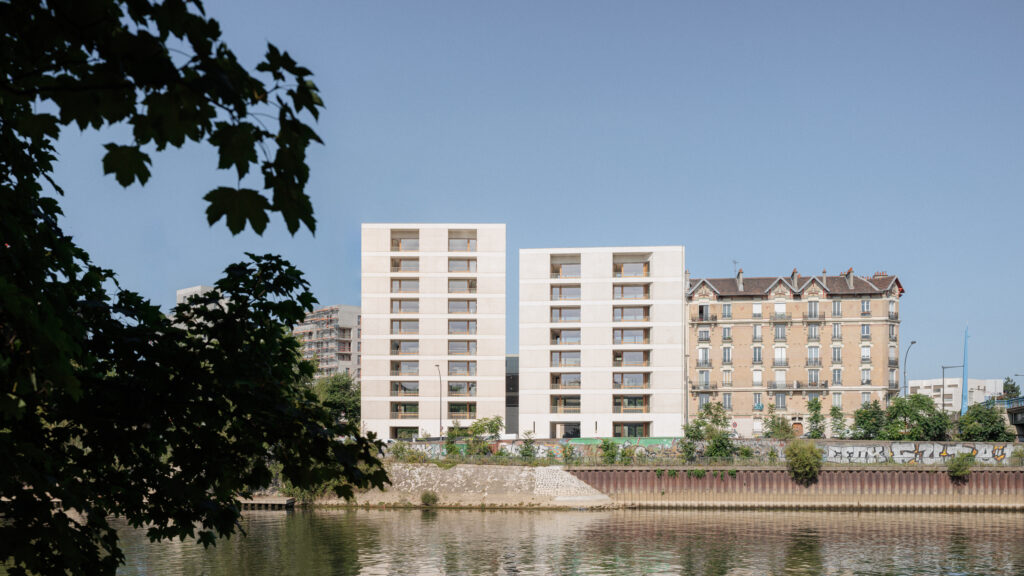
The Quai Henri Pourchasse residence is located on an exceptional site between the Seine River and the future Parc des Confluences. Composed of three buildings arranged around a private garden, the residence is structured around two important witnesses to the area’s industrial history: a faubourg-style building and a renovated historic hall that will soon host a cultural venue.
Its architecture, which at first glance appears to contrast with its immediate surroundings, actually responds to the Terrasses de l’Atelier de Montrouge — buildings listed in the inventory of historic monuments and located 300 meters away.
Continuity with the faubourg-style building is ensured through the treatment of façades with horizontal bands and recessed joints, the management of building heights, the sequencing of north and south windows, the alignment of floor levels, and the installation of metal shutters.
The active ground floor with extensive glazing, the through-passages, the private garden, and the paved lane create genuine visual openings that bring transparency and lightness while naturally connecting the Seine River and the park.
This sense of transparency continues on every floor, where the apartment layout allows for fully dual-aspect living spaces, with two large bay windows facing generous loggias positioned opposite each other. This configuration provides homes where natural light and natural ventilation can fully flourish.
Intended Use
Residential (43 apartments), Retail and activity (2 units)
The Team
Building Developer: HIBANA
Project Architect: Atelier Raphaël Gabrion
Project Advisor: Upcyclea
Project Showcase
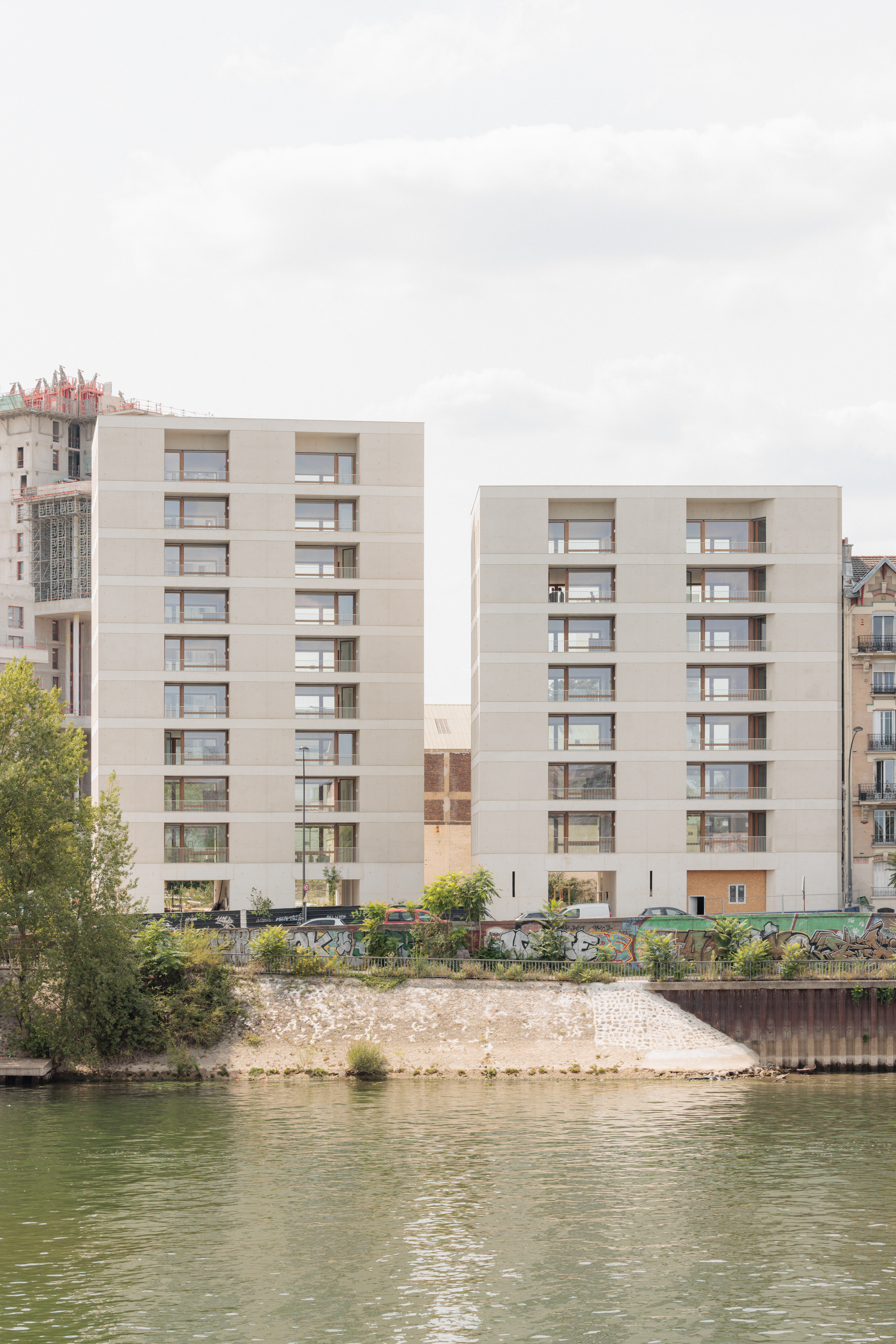
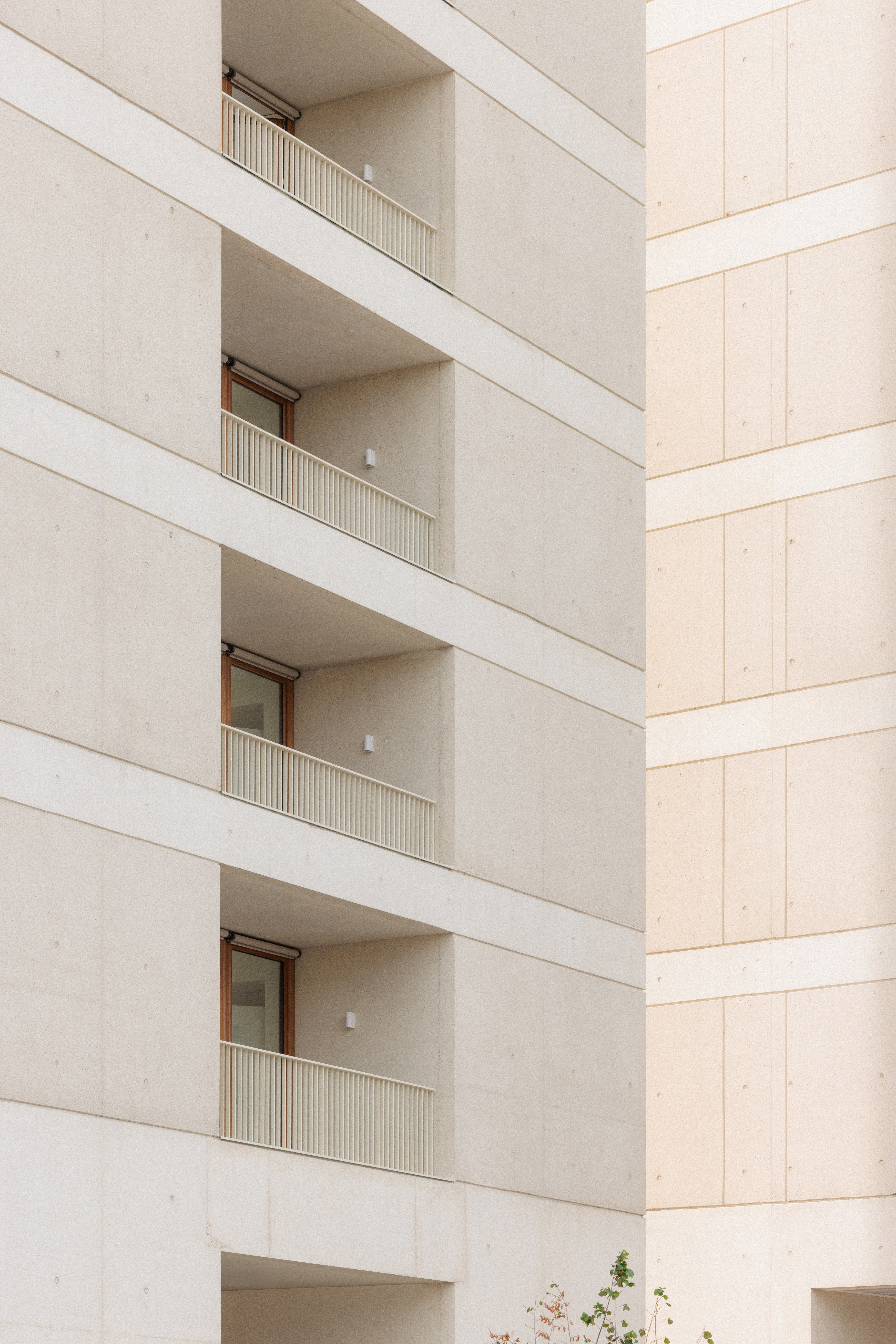
Photo credits: Salem MOSTEFAOUI
Elements
Bioclimatic Design and Resource Conservation
Inventory and Traceability of Materials
Indoor Air Quality
Preservation and Development of Biodiversity
User Comfort
Energy Savings in Heating, Cooling, and Lighting
Sobriety
Bioclimatic Design and Resource Conservation
⁂ User Well-being
Bioclimatic design forms the cornerstone of the project. The architectural and technical strategies aim to harness natural climatic conditions in order to reduce energy demand while enhancing user comfort.
All dwellings are designed with dual orientations, and many benefit from triple orientation, enabling efficient natural cross-ventilation. Large glazed openings maximize daylight penetration, reducing reliance on artificial lighting while enhancing spatial quality. Deep loggias provide transitional outdoor spaces that serve as passive solar protection, limiting overheating during warmer periods.
High-performance insulation, including recycled cotton-based METISSE insulation, contributes to thermal stability, while vegetated roofs reduce heat transfer through evapotranspiration in summer and limit heat loss in winter. These combined measures enable the project to achieve high energy performance, consistent with the E3C1 level of the E+C- label, reflecting reduced energy consumption and controlled carbon emissions.
Beyond technical performance, the design prioritizes durability and long-term resource efficiency through robust material choices and energy-efficient systems, reducing operational costs and environmental impact.
Inventory and Traceability of Materials
⁂ Healthy Materials (Design for Disassembly, Material Re-Use)
A forward-looking circular economy strategy underpins the project through the implementation of a material inventory and traceability system. A dedicated materials bank documents the origin, composition, and potential future reuse of key components, with circular passports covering a large portion of materials.
This approach anticipates future renovations and end-of-life scenarios, facilitating reuse and responsible resource management. By transforming materials into traceable assets, the project supports long-term adaptability and promotes a shift toward circular construction models.
Indoor Air Quality
⁂ Enhance Air Quality and Indoor Climate
⁂ User Well-being
Indoor air quality is addressed as a critical component of occupant health and well-being. Architectural design and material selection work together to ensure a healthy interior environment.
Natural ventilation is enabled by multi-oriented layouts, allowing effective renewal of indoor air. Materials and finishes are selected for low emissions of volatile organic compounds (VOCs), aligning with rigorous certification standards such as the Air Label Score.
Efficient ventilation and heating systems further contribute to maintaining healthy indoor conditions, addressing risks associated with increasingly airtight buildings and ensuring comfort alongside health protection.
Preservation and Development of Biodiversity
⁂ Actively Support Biodiversity
The project integrates biodiversity enhancement as a fundamental design principle. A significant proportion of open ground supports ecological continuity, water infiltration, and habitat creation.
Native and locally sourced plant species strengthen ecological resilience while preserving regional biodiversity. Vegetated roofs and diversified planting schemes foster habitats for pollinators and urban fauna, while reduced light pollution and pesticide-free maintenance support ecological balance.
Landscape design also responds to site-specific constraints, including flood risk management due to proximity to the Seine, ensuring environmental resilience alongside ecological value. These interventions enhance the microclimate and contribute to a restorative living environment.
User Comfort
⁂ User Well-being
User comfort is addressed holistically, encompassing visual, thermal, and social dimensions.
Generous daylighting and unobstructed views enhance visual well-being, while careful material choices amplify light diffusion throughout interiors. Thermal comfort is ensured through passive strategies such as loggias, shading devices, high-performance insulation, and natural ventilation.
The project also fosters social interaction through shared outdoor spaces, local shops, and communal amenities that encourage encounters and community building. Diverse housing typologies promote social and generational diversity, reinforcing inclusivity and collective well-being.
Energy Savings in Heating, Cooling, and Lighting
⁂ Integrate Renewable Energy
Energy efficiency translates directly into reduced operational costs for residents. Passive design strategies, combined with efficient systems such as LED lighting, low-energy ventilation units, and optimized heating solutions, minimize energy consumption.
Natural ventilation, shading devices, vegetated roofs, and high-performance insulation reduce heating and cooling demands while improving comfort. These measures also mitigate urban heat island effects, contributing to environmental resilience at both building and neighborhood scales.
Sobriety
Carbon reduction is a central ambition guiding the design process. A lifecycle assessment informed strategies to minimize emissions across construction, operation, and material selection.
Concrete use has been carefully optimized, favoring low-carbon alternatives and limiting unnecessary structural elements. Biosourced and recycled materials have been prioritized, including insulation derived from recycled fibers and low-emission finishes. Local sourcing of materials and collaboration with regional companies further reduce transport-related emissions and reinforce territorial resilience.
Vegetation and open ground areas contribute to carbon sequestration, while connections to a renewable-energy-dominated heating network reduce operational emissions. Together, these measures demonstrate a holistic approach to carbon management aligned with contemporary low-carbon building practices.
Delights
Enhancing Green Mobility
Development of Short Supply Chains and Local Economy
Integration into the Neighbourhood Landscape
Enhancing Green Mobility
The project actively promotes sustainable mobility by integrating infrastructure that encourages low-carbon transportation. Secure and accessible bicycle storage areas, visitor bike racks, and provisions for electric vehicle charging infrastructure support a shift toward environmentally responsible mobility practices.
These features reduce transport-related emissions while supporting healthier and more flexible modes of movement for residents and visitors alike.
Development of Short Supply Chains and Local Economy
Local economic integration is a key value of the project. Priority has been given to regional contractors and locally sourced materials, reducing transport impacts while supporting local expertise and economic vitality.
The project also demonstrates social responsibility by contributing to professional reintegration programs, involving companies committed to employing individuals facing barriers to employment. The use of recycled-material insulation produced by a social enterprise further reinforces the project’s commitment to inclusive economic practices.
Integration into the Neighbourhood Landscape
Architecturally and urbanistically, the project establishes a balanced dialogue with its surroundings. Rather than imitating existing forms, it proposes a contemporary interpretation that respects the scale and morphology of the neighborhood while asserting a clear identity.
The arrangement of buildings contributes to the continuity of the urban block, creating a coherent and legible spatial structure that integrates seamlessly into the evolving landscape of the development area.